
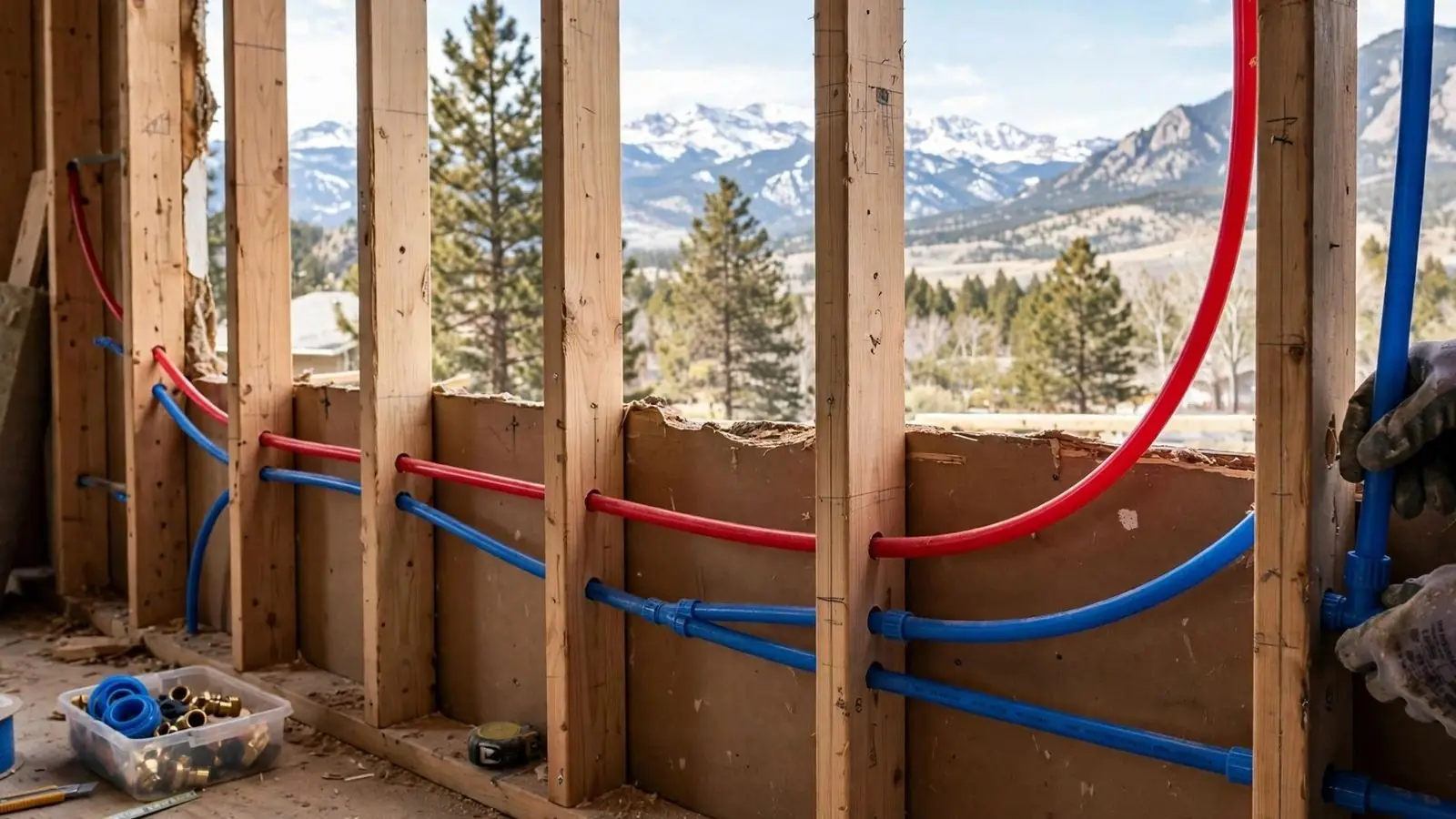
A whole house plumbing replacement makes sense when the supply pipes are failing across the system, not just at one spot. Rusty water, falling pressure and a string of leaks in different rooms are the usual triggers. The project replaces supply lines throughout the house, and sometimes drains too.
Most replacements take a few days and involve opening walls. Planning the work before the first cut saves money. If you want to compare options, our repiping page lays out partial and whole house choices.
Warning SignsSigns You Are Past Repairs
Clues that point to full replacement
- Pinhole leaks in more than one room
- Brown or orange water at taps
- Galvanized or polybutylene pipe still in the walls
- Pressure that has dropped over several years
- Repairs that keep coming back in different places
A single pinhole leak does not mean the whole system is done. A pattern across rooms does. Ask a plumber to look at the pipe in the basement or crawlspace and compare repair costs against replacement.
Scope ChoiceSupply Lines Versus Drains
| System | What it carries | When it is replaced |
|---|---|---|
| Supply lines | Pressurized clean water to fixtures | Most common replacement, for corrosion and leaks |
| Drain lines | Waste water by gravity | Only when cracked, collapsed or failing |
| Water service line | Water from the meter to the house | When buried line fails, see the service line page |
| Gas lines | Fuel to appliances | Separate scope with its own safety rules |
Many people say whole house plumbing when they mean the supply lines. Be clear with a contractor about which systems are in scope.
MaterialsPipe Choices
PEX
- Flexible, fewer joints
- Good freeze tolerance for its class
- Quick to install in walls
- Needs protection from sunlight
Copper
- Long track record
- Rigid and strong
- More labor and fittings
- Some water chemistry can cause pinholes
Either material is acceptable when installed correctly. The right pick depends on budget, the layout and your preference.
SequenceHow The Work Usually Goes
Plan and permit
A walk through, a written scope and any needed permit.
Open access
Small openings in walls, ceilings or floors to run new lines.
Install and test
New lines go in, fixtures reconnect and pressure tests confirm the work.
Patch and inspect
Openings are patched or left for a drywall contractor, and inspections are scheduled.
Water is off for part of each day. Plan a way to cook, wash and use the toilet. Some homeowners stay with family or use a rental during the heaviest days.
Choosing A ContractorQuestions To Ask Before You Hire
Ask every bidder
- Which Utah license category do you hold and can I look it up?
- Do you carry insurance for this work?
- What is the written scope and the price before work starts?
- How will you handle wall patching?
- What inspections will you schedule?
The Utah Division of Professional Licensing runs a license lookup and can be reached at (801) 530-6628. We welcome these questions on our own jobs.
PreparationWhat To Do Before The Crew Arrives
Clear access to walls, closets and the area around the water heater. Move furniture away from bathroom and kitchen walls. Take photos of the rooms before work starts so you can compare later.
Replacement quotes are available in Lehi and American Fork. Browse the service areas page for other towns, or our leak detection service if you want to find out whether a leak is the real problem before committing to replacement.
PlanningPreparing Your Household For The Work
A whole house replacement means water off for part of each day and open access in walls, ceilings or crawl spaces. Ask for the schedule in plain terms, including which days the kitchen and bathrooms will be unusable. Plan meals, laundry and showers around it.
Move furniture and valuables away from the walls where crews will cut access holes. Keep pets and small children in a separate area because of tools and open holes. Tell the crew about plaster, textured finishes or older drywall that is hard to patch.
Ask who handles patching and paint. Some plumbers leave rough openings for a drywall contractor and some include basic patching. Get the answer in writing with the price before work starts.
HiringQuestions To Ask A Contractor
Ask which pipe material will be used and why, how many access holes to expect and who handles permit questions. Ask how long the water will be off each day and what happens if the crew finds a surprise behind a wall. Written answers help you compare quotes.
Questions about your own house? Call (385) 488-1892 and a person will answer.
New piping in Utah is installed under the International Plumbing Code (IPC) as amended by the state, so ask any contractor how the plan meets that code.
FAQsWhole House Replacement Questions
Most homes take a few days. Size, access and the number of fixtures change the schedule.
No. Water is off for part of each day while connections are made.
Call Lehi Building and Inspections at (385) 201-1035. They can tell you what applies to your project.
Both can last. PEX is faster to install and handles freezing better for its class, while copper has a long track record.
Lehi City says homes built before 1986 are more likely to have lead pipes or solder. Ask the city about testing.