
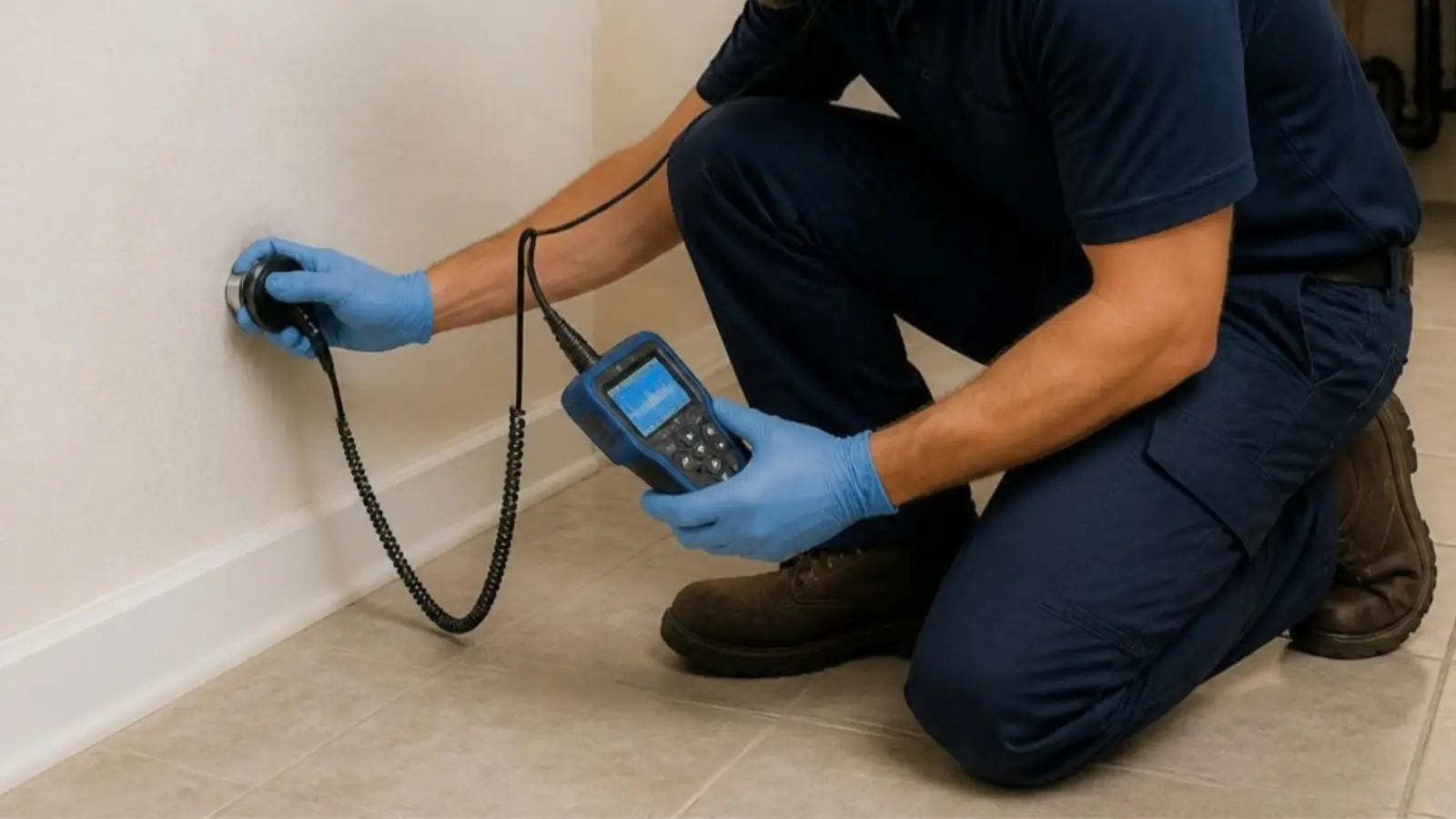
Leak detection works by narrowing down where water is escaping, using sound, heat, pressure and a process of elimination. A plumber starts with a meter test to confirm a leak exists, then uses listening gear, thermal imaging and pressure tests to find the spot. The goal is to open a small area, not a whole floor.
Each method has strengths and limits. This guide explains them so you know what to expect when you call our leak detection service.
Confirm FirstStep One Is Proving There Is A Leak
A plumber asks you to turn everything off, then watches the meter. If it moves, water is going somewhere. If it does not move, the problem may be a fixture or a bill issue rather than a pipe leak.
The next question is which pipe. Closing the main inside the house and watching the meter separates a leak in the buried line from a leak in the house. Zone valves and fixture shutoffs help narrow it down further.
Tools Of The TradeThe Main Methods
| Method | How it works | Best for |
|---|---|---|
| Acoustic listening | Sensitive microphones pick up the sound of water escaping a pressurized pipe | Slab leaks and buried lines |
| Thermal imaging | A camera shows temperature differences from hot water leaks or wet materials | Hot lines in floors and walls |
| Moisture meter | Measures moisture in drywall, wood and flooring | Walls, ceilings and floors |
| Pressure testing | Isolates a pipe section and watches for pressure drop | Confirming which section leaks |
| Video inspection | A camera on a cable looks inside drain lines | Drain and sewer leaks |
No single tool finds everything. A careful search uses two or three and compares the results.
Acoustic DetailWhy Sound Helps On A Slab
A leak under pressure makes a faint hiss or rush. Pipes carry that sound along the metal, and the sound is loudest closest to the leak. By moving a microphone across the floor, a plumber can find the loudest point and mark it.
Background noise can drown out a small leak, so quiet conditions help. If a neighbor is mowing or a pump is running, the search may need to wait or be repeated.
Thermal DetailWhen Heat Shows The Way
A hot water leak warms the material around it. A thermal camera shows that warm patch even when nothing is visible. Cold leaks can show as cool spots if the water is colder than the room.
Thermal images are clues, not proof. A warm duct or a sunlit wall can look like a leak. A moisture reading and a pressure test confirm what the image suggests.
Be ReadyHow To Prepare For A Visit
Helpful to have ready
- Your recent water bills showing the increase
- The location of the main shutoff and the meter
- A list of places where you saw stains, damp spots or heard water
- A quiet house during the test
- Access to crawlspaces and utility rooms
Clear access helps. A plumber who can reach the water heater, the main and the crawlspace spends time searching instead of moving boxes.
Next StepsWhat Happens After The Leak Is Found
Once the leak is located, the plumber explains the repair options and the cost before opening anything. A pipe in the slab can be repaired in place or rerouted through the walls. A leak in a wall is usually a smaller opening.
Leak work is available across Lehi and in American Fork. The service areas page shows the full list, and our burst pipe repair page if water is actively spraying.
Home ChecksWhat You Can Check Before The Visit
Read your water meter, then shut off every fixture and read it again after an hour or two. If the dial moved, water is going somewhere. Comparing the meter with a check at the house shutoff can narrow the leak to the street side or the house side.
Look for clues you can see. Warm spots on a floor, a musty smell, damp baseboards, cracked paint and a toilet that refills by itself all point toward a leak. Write down what you find and where, because it saves time during the visit.
Do not cut open walls or lift flooring on a guess. Acoustic and thermal tools can find the spot first so the repair opening stays small. Call the 24/7 line if water is visibly spreading.
Questions about your own house? Call (385) 488-1892 and a person will answer.
FAQsLeak Detection Questions
The detection methods do not. Opening a small area comes after the leak is located, and we explain it before starting.
It can narrow a leak to a small area on many slabs, but background noise and pipe layout affect results.
Sometimes, if the water cools the surrounding material. Moisture readings and pressure tests confirm the finding.
Turn off all water, read the dial or leak indicator, wait fifteen minutes and read it again. Movement means water is escaping.
In Lehi, a purple lid marks the secondary irrigation meter, not your culinary water meter.